


Keep only what review needs
Findings keep the matched field and where it was found. Cookie values from website scans are never stored.
New Registers built for India’s DPDP Act
OptFlow scans your code and websites for personal data, then carries that evidence into the privacy records, assessments, and reports your team maintains.
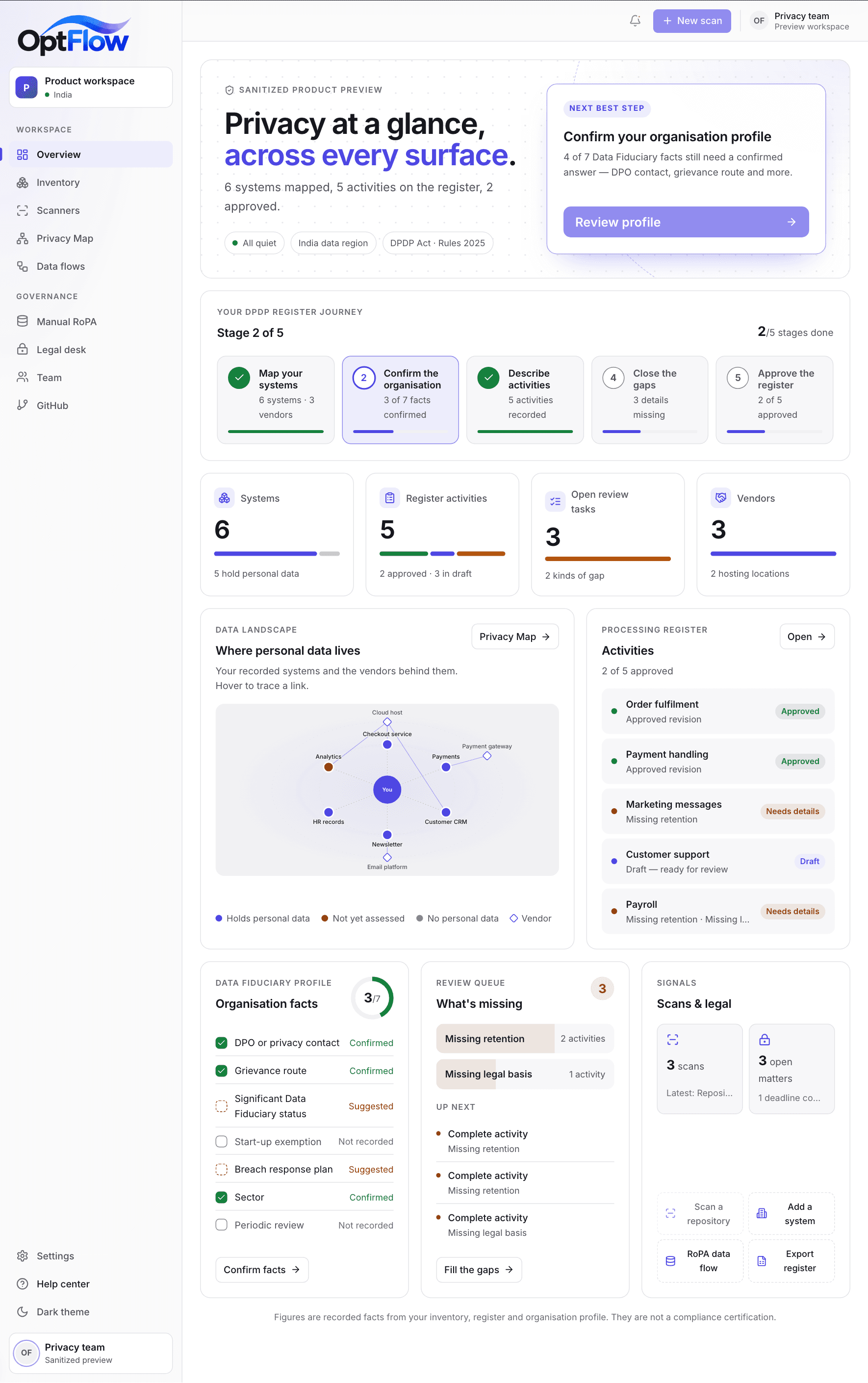
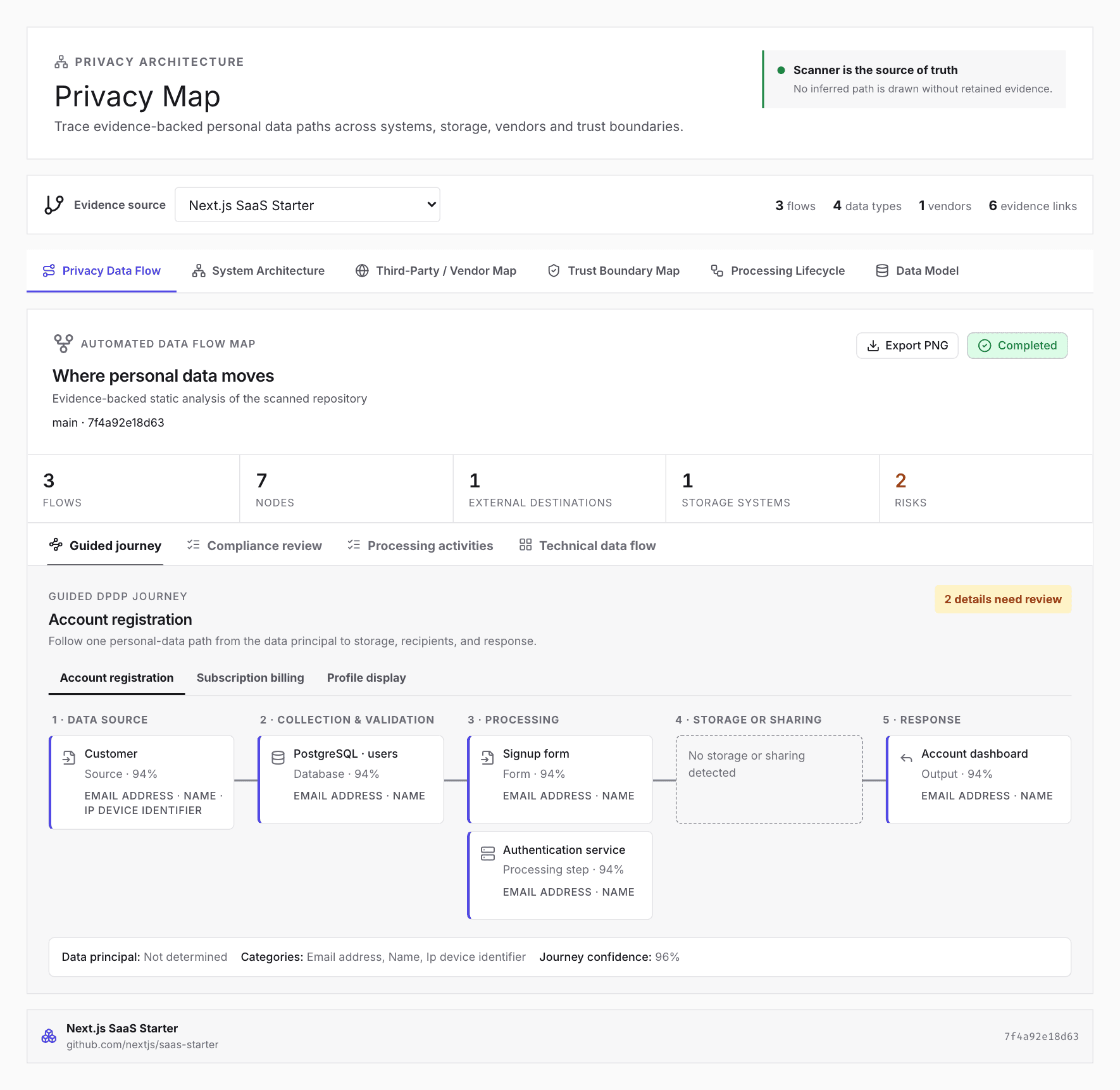
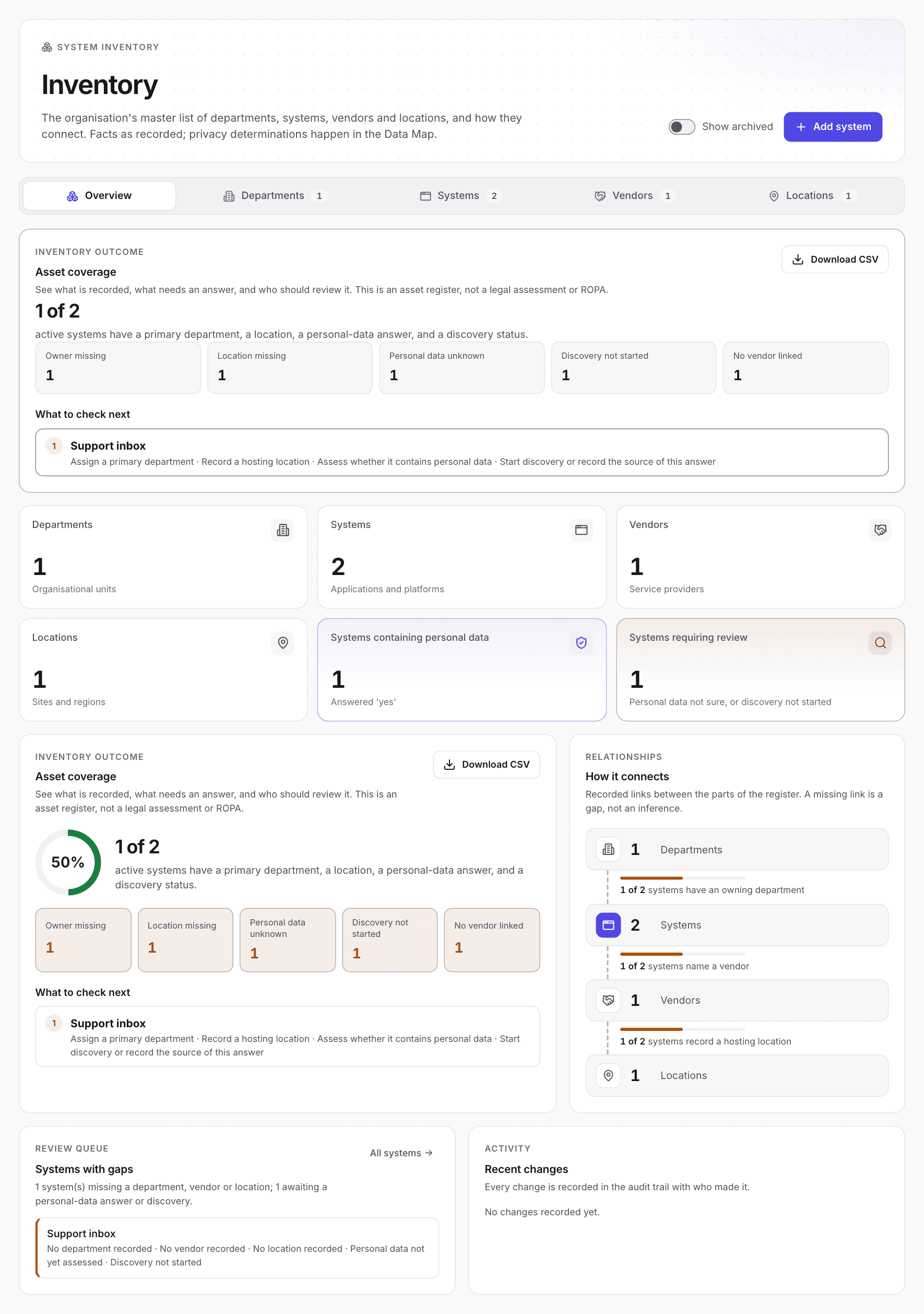
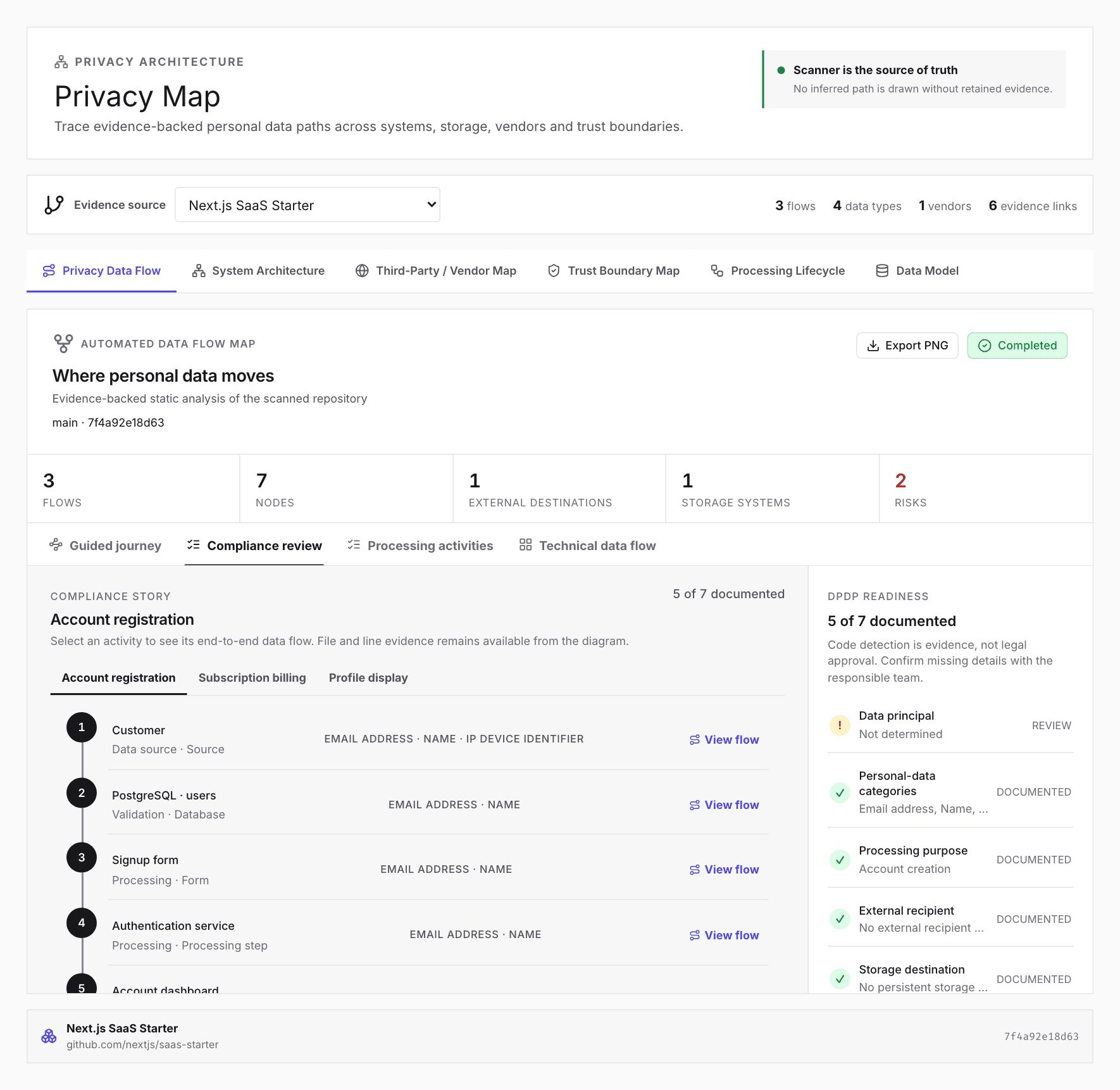
Scroll to bring it into view, then click through the sidebar. This is the product, running with sample data.
Interactive product preview · Use the sidebar to explore
Three jobs your team does by hand today, joined by the same evidence.
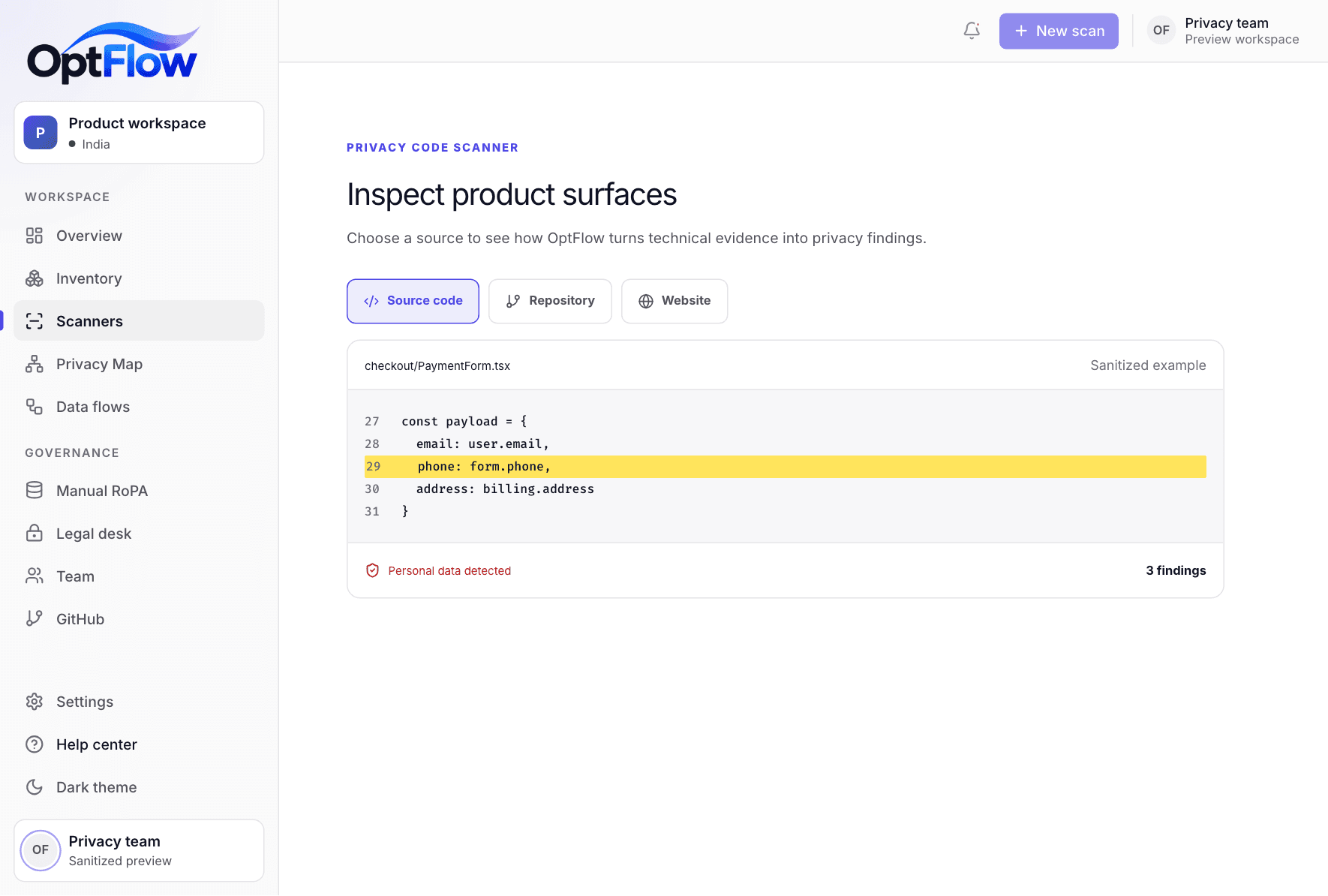
form.phone in PaymentForm.tsx:29Personal data detected
Six steps, one body of evidence. Each step builds on what the last one found instead of starting a new spreadsheet.
Scan repositories and live websites for personal data, trackers, and outbound transfers.
Join what the scans found into flows: where data is collected, processed, stored, and shared.
Turn reviewed flows into processing records, with the source evidence attached.
Review risk against the same evidence and record who decided what.
Rescan as the product changes and see which records are affected.
Export the register and show exactly where each statement came from.
The register follows the Digital Personal Data Protection Act and the 2025 Rules, so what your engineers find becomes entries your Data Protection Officer can sign off.
checkout-service, 3 findingsFindings keep the matched field and where it was found. Cookie values from website scans are never stored.
Every record carries its storage and transfer locations, so cross-border questions have an answer.
When evidence changes, the earlier review stays on record next to the new one.
Scans, records, and people are scoped to one workspace and never shared across them.
A privacy operations platform that connects technical data discovery with the records, assessments, and reports privacy teams maintain.
Repository and website scanning, data-flow mapping, and evidence-linked privacy review. Broader workflows are being added step by step.
The register is structured around the Digital Personal Data Protection Act and its 2025 Rules: Data Principals, purposes, retention, and cross-border transfers.
Send an access request below. Once it is approved, sign in with the same Google account email to open your workspace.
We review every request and set up a private workspace for your team. After approval, sign in with the same Google account email you enter here.